Sociology · University of Toronto
Soli Dubash
Ph.D. Candidate
I study health and well-being, social networks, social psychology, and social inequality over the life course. I am currently on the academic job market, with my dissertation in its final stages of revision.
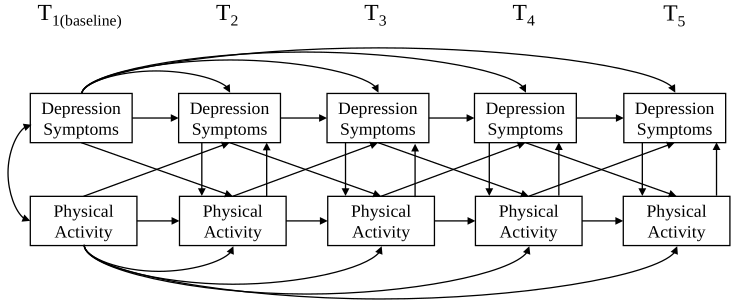
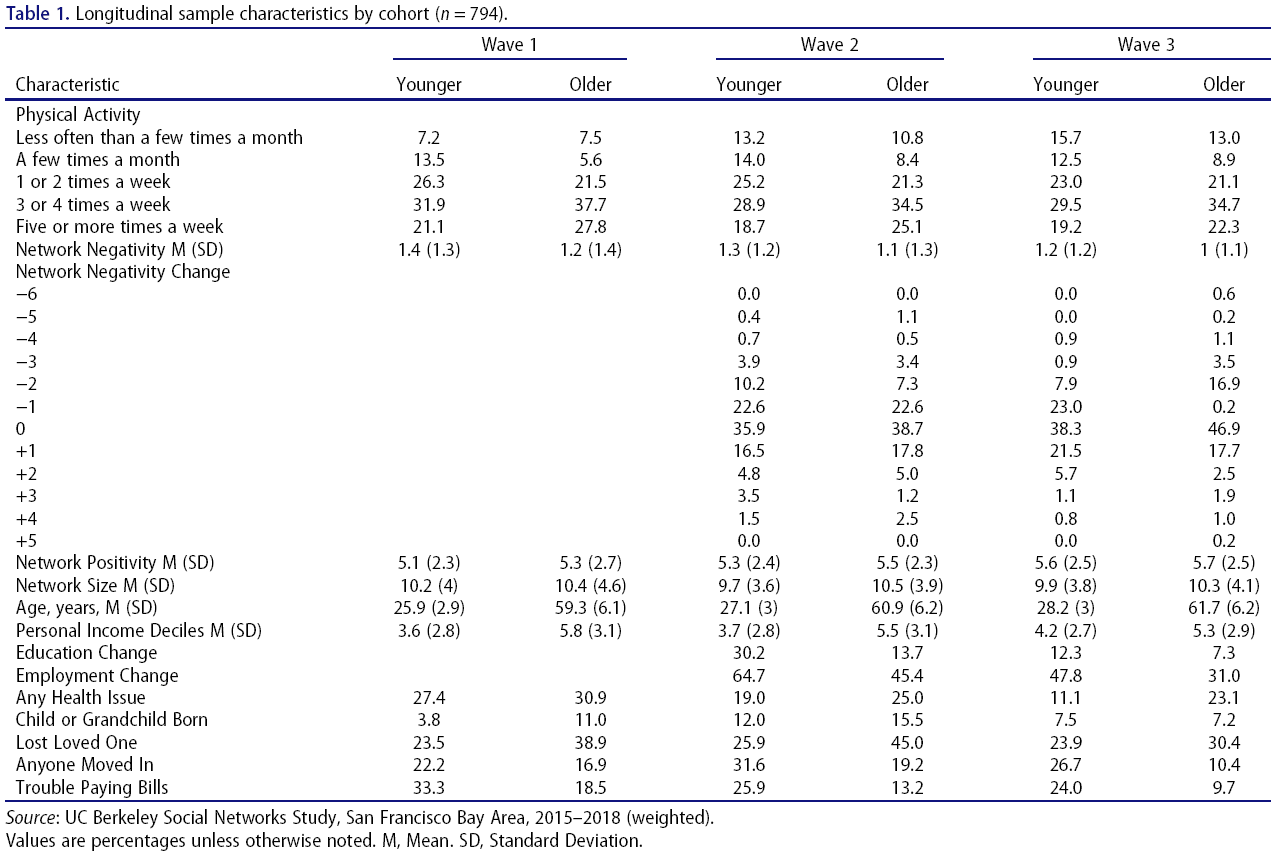
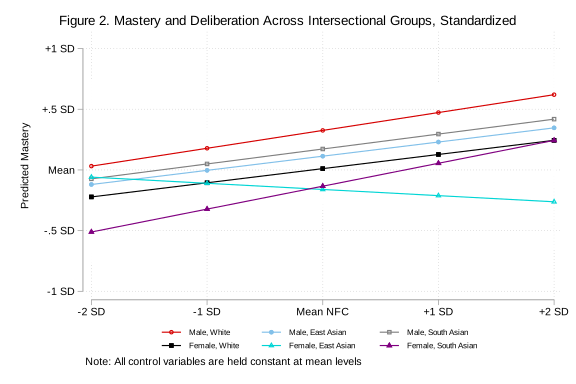
My dissertation explores the social mechanisms linking personal networks to health and well-being. In this work, I examine how changes in the negative qualities of relationships are linked to changes in physical activity, how network social capital relates to personal control beliefs, and how difficult relationships can amplify the depressive symptoms associated with chronic conditions.
Social inequality is a core theme in my research. This motivates an interdisciplinary research program that brings social network and life course perspectives into conversation with sociological theory. My current projects examine the interplay between health and relationship qualities over the life course, gender dynamics in personal networks, the causes of occupational segregation, and gender differences in pain in Canada. My work has appeared in Society and Mental Health; Journal of Health and Social Behavior; Population, Space and Place; Mental Health and Physical Activity; Sociological Forum; The American Sociologist; Field Methods; and is forthcoming in Social Psychology Quarterly.
I welcome opportunities to work with others on questions related to health, social networks, culture, stress, social inequality, and the life course. Some of my most rewarding work has emerged through collaboration, especially when scholars bring different substantive interests or methodological strengths to a shared question. I value team-based science and am committed to open science and transparent research practices that make research more accessible, reproducible, and trustworthy. These commitments have been shaped by research assistant roles with more than ten professors since I began graduate school.
As both a course instructor and teaching assistant, I have a broad teaching portfolio at the University of Toronto. I have independently taught 9 courses, including the sociology of mental health and mental disorders (syllabus and recent course evaluations), introduction to sociology 2: social inquiries, sociology of health and illness, and medical sociology. I have also supported teaching in introduction to sociology 1 & 2, sociological theory, culture and inequality, and many other courses. In 2022, I completed the University of Toronto Teaching Fundamentals Certificate.
My research has been supported by the Social Sciences and Humanities Research Council of Canada and the Government of Ontario. I have also received awards including the Daniel G. Hill Prize for Best Graduate Paper in Sociology (twice, in 2023 and 2026) and the Canadian Sociological Association Outstanding Graduate Award (MA). My research has also been supported by access to the compute resources and training from the SciNet High Performance Computing Consortium at the University of Toronto.
While not at work, I enjoy cooking, sports, and live music. Depending on the season, you can find me bouldering, lifting weights, cycling, or sailing with friends.